

For a terminal manager, time is a financial unit of measurement. Loss of visibility over mobile equipment is an invisible scourge that weighs heavily on EBITDA.
Between ships and warehouses, trailers, ULDs, and lifting equipment are often "lost" as soon as they enter a hangar. A metric RTLS (Real-Time Locating System) solution enables the transition from manual inventory to a dynamic 24/7 view.
By pinpointing assets to within a meter, you reduce empty mileage for drivers and optimize dock-to-rail-to-road transfers.
Set up automatic alerts if a valuable asset (sensitive container, service vehicle) leaves its authorized perimeter.

Coactivity is the number one risk in port areas. The danger is multiplied in confined spaces and massive structures where GPS is inoperative.
A PTI device without precise indoor location is only half a solution. If it falls into a ship's hold or an isolated technical area, Wheere technology penetrates metal structures to guide rescue teams to the exact location.
During an Internal Emergency Plan (leak, fire), instantly identify the location of each employee. Don't waste time "counting heads": see who is safe and who needs to be rescued first.
Ports such as HAROPA and Marseille-Fos are home to critical industrial sites (chemicals, energy) where conventional radio waves (Wi-Fi, Bluetooth) bounce off metal tanks.
With Wheere, locate your maintenance tools and personnel among racks of pipes, where conventional solutions fail due to poor signal penetration.
Meet strict traceability requirements for sensitive materials without deploying heavy and costly network infrastructure, which is often incompatible with installation constraints in ATEX zones.
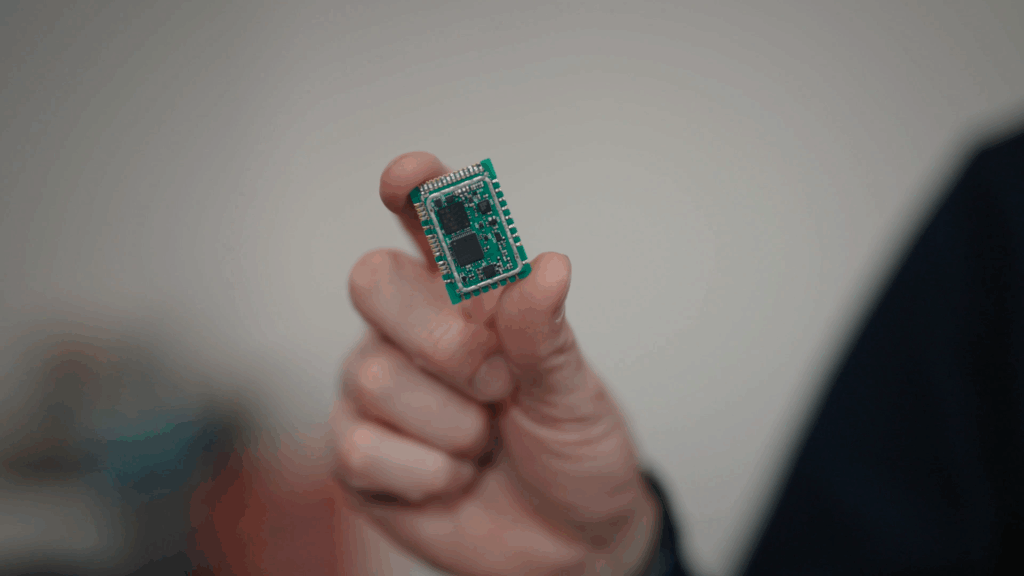
In a Smart Port, location data does more than just "find" an object; it orchestrates overall performance. Here's how Wheere technology transforms your physical constraints into operational levers:
Lifting accessory tracking:real-time tracking of spreaders, spreader beams, and chains that are often misplaced in technical storage areas or maintenance hangars.
Reduction of "empty miles":analysis of the trajectories ofstraddle carriers and indoor forklifts to optimize handling flows and reduce fuel consumption.
Hands-free inventory:automatic updating of the location of a package or asset as soon as it is placed in a warehouse, eliminating manual entry errors.
Smart Pick-and-Pack:guiding operators to the exact location of a spare part or critical merchandise within massive parts warehouses.
Tracking reefer containers in warehouses:ensuring seamless traceability of refrigerated containers when they leave the dock for indoor unloading areas.
Extended parking alerts:automatic notification if sensitive goods are parked for too long in a non-compliant area.
Protection of Isolated Workers (PTI) in confined spaces:immediate metric geolocation of an agent in difficulty in the holds of a ship or in an underground technical gallery.
Access management in ATEX zones:real-time monitoring of the number of people present in an explosive risk zone to ensure compliance with safety limits.
Anti-intrusion geofencing:creation of virtual barriers around high-value goods. Any unplanned exit from the zone triggers an immediate security alert.
Controlling service providers:automated auditing of subcontractors' working hours on the terminal for accurate billing.
Utilization rate monitoring:analysis of the actual operating time of dock equipment (cranes, gangways) to trigger maintenance based on actual wear and tear rather than a schedule.
Fault location:accurate recording of the location of damage to port railways or underground networks to facilitate repair work.
Unlike complex hybrid solutions, Wheere offers a unified response to the constraints faced by port authorities:
Simple infrastructure:no need to cover every square meter with hundreds of beacons.
Resilience in metal environments:technology designed to withstand the most hostile environments, from the solid steel of ships to the density of port cranes.
Indoor/Outdoor continuity:seamless tracking from the loading dock (outside) to the heart of the factory or warehouse (inside).
Share it and discover other articles you might also like!
