
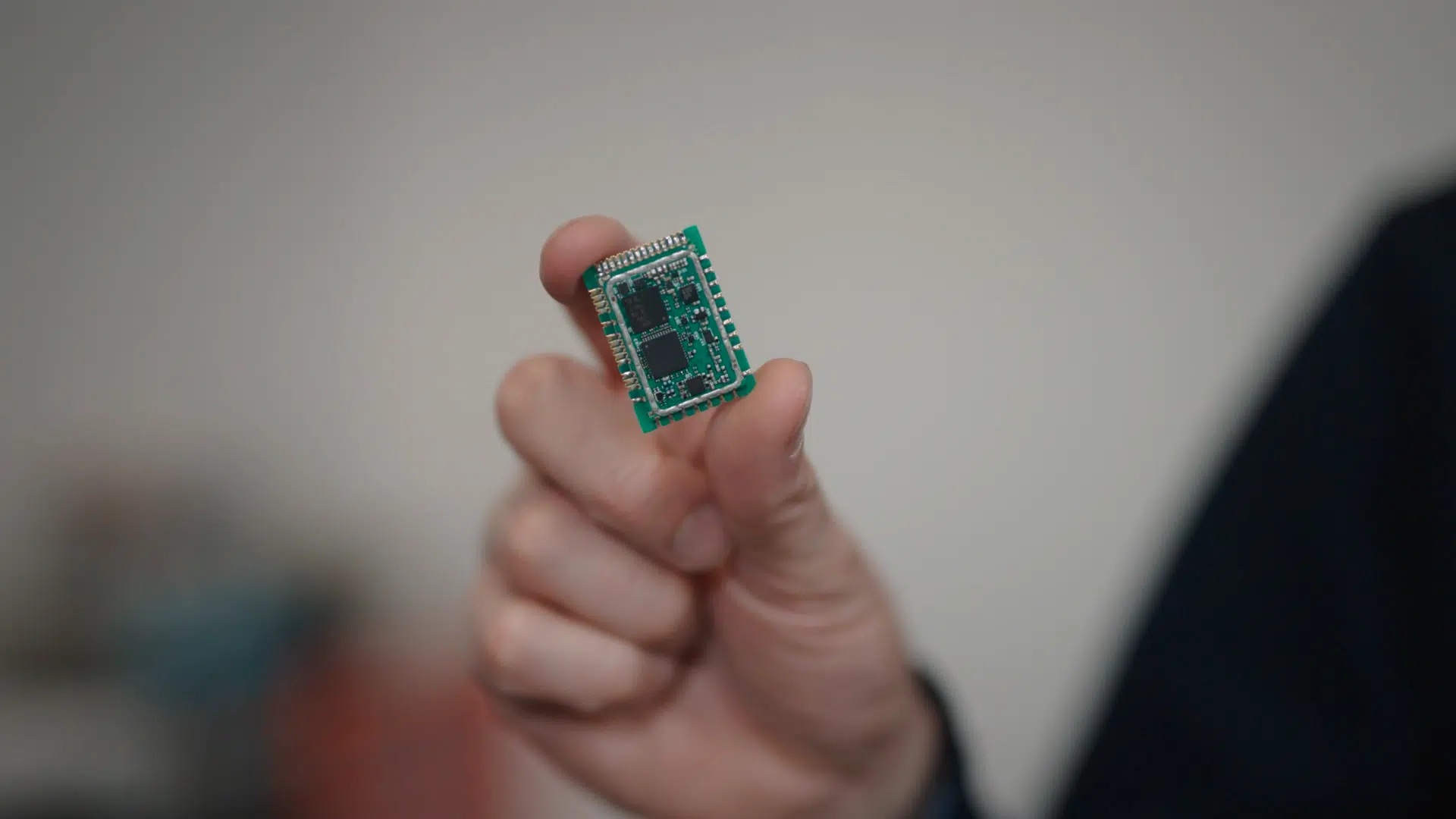
How EDF and TotalEnergies use Wheere technology
Share this article
Contents
Share this article
An innovation designed for complex environments
Indoor geolocation remains a major challenge in closed, dense or ATEX-compliant industrial environments. This is precisely where Wheere comes into its own, a French technology capable of locating individuals or equipment with sub-meter accuracy, over an area of 1 km² requiring just four antennas. Unlike conventional solutions, which are often inoperable in such contexts, Wheere combines precision, reliability and low infrastructure.
TotalEnergies: making workers safe and robot autonomy reliable
On an industrial site, risks can arise from the environment (leakage, explosive atmosphere) as well as from human or robotic activity. TotalEnergies is testing Wheere in several scenarios representative of its operations:
- Isolated workers: the solution enables an alert to be triggered and located in real time, for example when an operator falls or loses consciousness. The aim is to guide emergency services without delay.
- Offshore platforms: the precision of the location is used to reinforce the monitoring of teams, including those of subcontractors, in a context where human density and HSE constraints are particularly high.
- Inspection robots: equipped with Wheere trackers, these units operate in complex areas where GPS is inoperable. Precise geolocation guarantees continuous supervision, essential for safe automation of inspection tasks.
These use cases illustrate the same logic: correlate the position of people and machines with existing HSE data, to react faster and improve prevention.
Calculate the ROI of the wheere system on your site
EDF: traceability and safety at nuclear sites
At EDF, the Wheere experiment is part of a strategy to modernize systems for monitoring human and material flows. Several use cases are being tested:
- Tracking operators: in buildings with massive structures, indoor tracking ensures that no worker remains undetected in a high-risk situation.
- Traceability of sensitive equipment: whether it's a dosimeter, a container or a precision tool, every move can be tracked. This facilitates loss prevention, limits logistical errors and secures highly critical areas.
- Flow management: the solution paves the way for precise counting of entrances and exits in restricted areas, helping to control exposure times and comply with regulatory thresholds.
The challenge for EDF is twofold: to reinforce the safety of its facilities and ensure greater responsiveness in the event of an incident, while reducing the costs associated with losses or material errors.
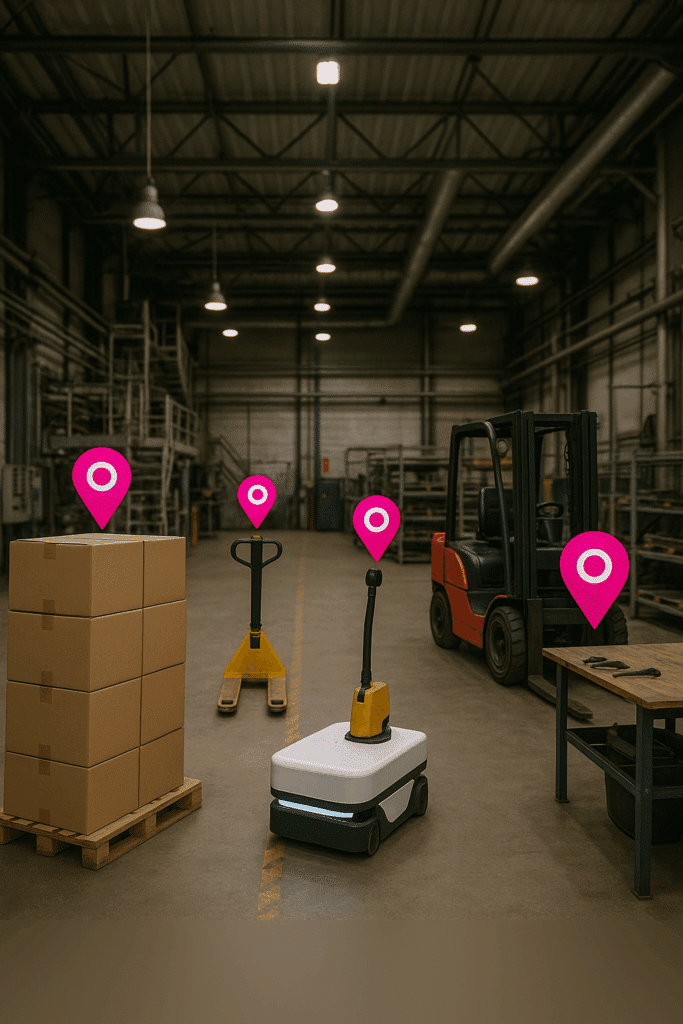
This article may also be of interest to you
5 trends shaping industrial asset tracking in 2026
Towards a new generation of HSE and logistics solutions
EDF and TotalEnergies turned to Wheere above all to meet a concrete need: reliable geolocation technology in environments where few solutions deliver on their promises.
Wheere's gradual integration shows that precision indoor/outdoor geolocation is no longer just a convenience tool, but a strategic lever for :
- enhance operator safety,
- improve equipment traceability,
- support the empowerment of robots,
- and, ultimately, optimize operating performance.
In a sector where business continuity, safety and logistical efficiency are intimately linked, this type of technology could become a standard in the years to come.
Did you like it?
Share it and discover other articles you might also like!
- Articles
- News
- Articles