

In a fast-changing industrial sector, where digitization,automation, digital twinning andflow optimization have become major competitive levers, the need for accurate, reliable field data has never been more crucial. These advanced systems, whether used to control an AGV, trace a material flow or synchronize a production line in real time, require an invisible but essential raw material: data.
Among the most critical, location data is a real must-have. However, while GPS has become the standard for outdoor use, indoor geolocation remains a major technological challenge. Several technologies coexist (BLE, UWB, RFID, Wi-Fi...), each with its own limitations.
This is the background to the emergence of Wheere, a disruptive patented technology, designed in France, that redefines indoor tracking standards. Here are 10 reasons why this innovation is a game-changer.
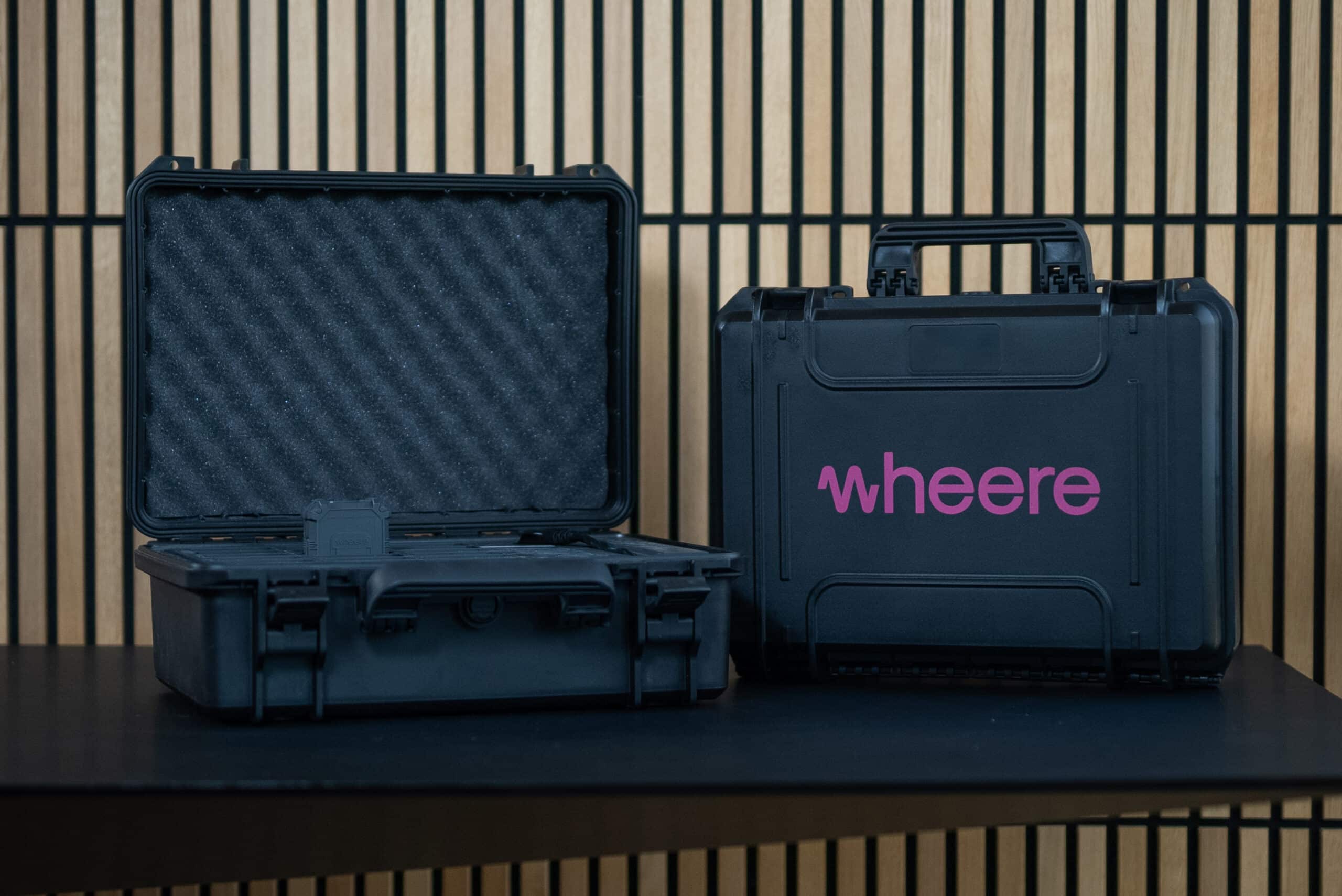
Wheere has overcome a major technological hurdle: reconciling indoor signal penetration and positioning accuracy.
Conventional technologies come up against an insoluble compromise: low frequency to penetrate obstacles or high frequency to locate precisely. Wheere proposes a disruptive approach.
Thanks to the use ofunmodulated VHF CW radio waves, Wheere is the only solution capable of penetrating up to 50 meters of concrete, while enabling precise positioning calculations.
Industrial environments are often saturated with metal structures, walls and pipes, causing multiple signal reflections. Multipath is the main cause of inaccuracy in indoor geolocation systems.
Wheere is based on a proprietary algorithm capable ofisolating the direct signal useful for localization, while neutralizing parasitic signals from bounces. The result: consistent accuracy in the metre range, even in factories, tunnels and hospitals.
One of the biggest obstacles to the adoption of indoor tracking solutions is the density of the infrastructure required. Where BLE or UWB require hundreds of emission points, Wheere needs just four to cover 1 km².
These antennas, positioned on the basis of a site survey and an optimization algorithm, ensure reliable coverage, with simplified maintenance and natural scalability.
With Wheere, the transition from indoor to outdoor environments is totally transparent. No signal loss, no recalibration: location is continuous and unified. It's a world exclusive that guarantees a seamless, fluid tracking experience, essential for tracking logistics flows, vehicles or personnel.
Wheere offers two approaches to integrating its technology:
A turnkey, ready-to-use tracker, integrating data reception, calculation and transmission (BLE, Wi-Fi, LoRa).
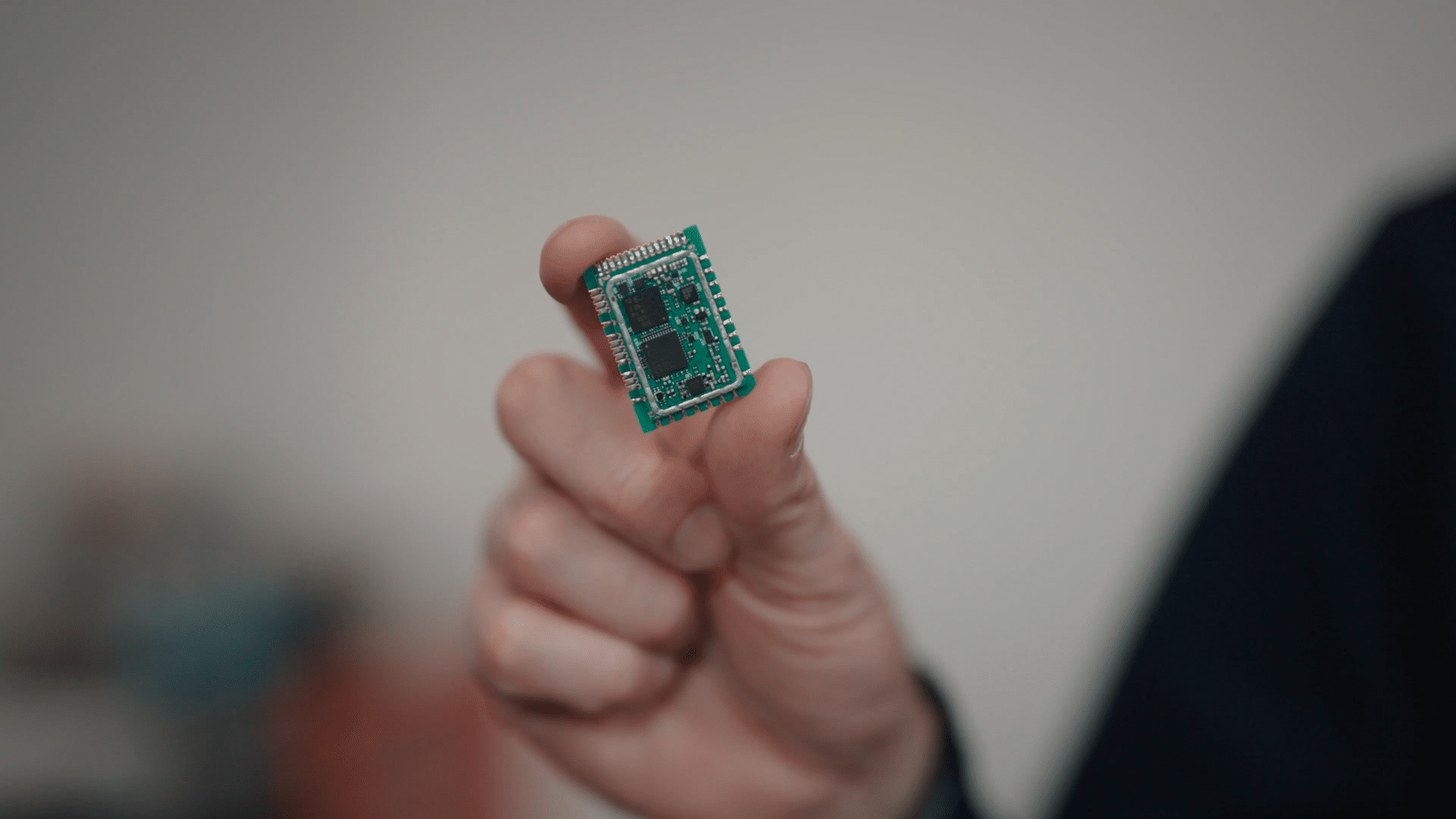
An OEM module for integration in a customized tracker. Documentation and development kits make it easy to integrate into your own electronic designs.
This versatility enables us to meet specific business needs, while optimizing costs and energy consumption.
Geolocation data (latitude, longitude, altitude) are transmitted as required:
in close proximity,
in LoRa via a gateway,
or 4G directly to the server.
The Wheere server then communicates with your software via API REST. For sensitive projects, you can also replace the Wheere server with your own local or cloud server, guaranteeing security and sovereignty.
Integrating an indoor tracking solution requires specialized expertise. That's why Wheere offers comprehensive support, provided by a multidisciplinary team: radio frequency, signal processing, firmware, on-board electronics...
Right from the design phase, we carry out a technical diagnosis of the site and its requirements. The antennas are then installed and tested, and the solution deployed within 48 to 72 hours. Finally, operational training and ongoing technical support are provided.
Developed in the Occitanie region, at Castelnau-le-Lez, Wheere is the fruit of 100% French R&D. The equipment is produced locally, and the servers used are hosted in France. This end-to-end control guarantees a high level of reliability, confidentiality and security.

The technology roadmap calls for the Wheere receiver to be miniaturized in the form of an ASIC (8 x 8 mm), for native integration in all types of IoT devices. This component will significantly reduce energy consumption and production costs, paving the way for widespread use.
Wheere's ambitions don't stop at industrial buildings. From 2032, the company plans to launch a constellation of LEO satellites, dedicated to precision indoor/outdoor tracking on a global scale.
Objectif : une localisation globale, continue, précise, sans infrastructure locale, y compris à l’intérieur des bâtiments, avec une précision < 1 mètre. Le premier satellite de test est d’ores et déjà programmé pour octobre 2026.
Wheere redefines the standards of indoor geolocation, providing a reliable, accurate, scalable and sovereign technology. For manufacturers looking for a high-performance tracking solution capable of integrating with modern architectures and adapting to future IoT challenges, Wheere is an indispensable tool.
Share it and discover other articles you might also like!
